
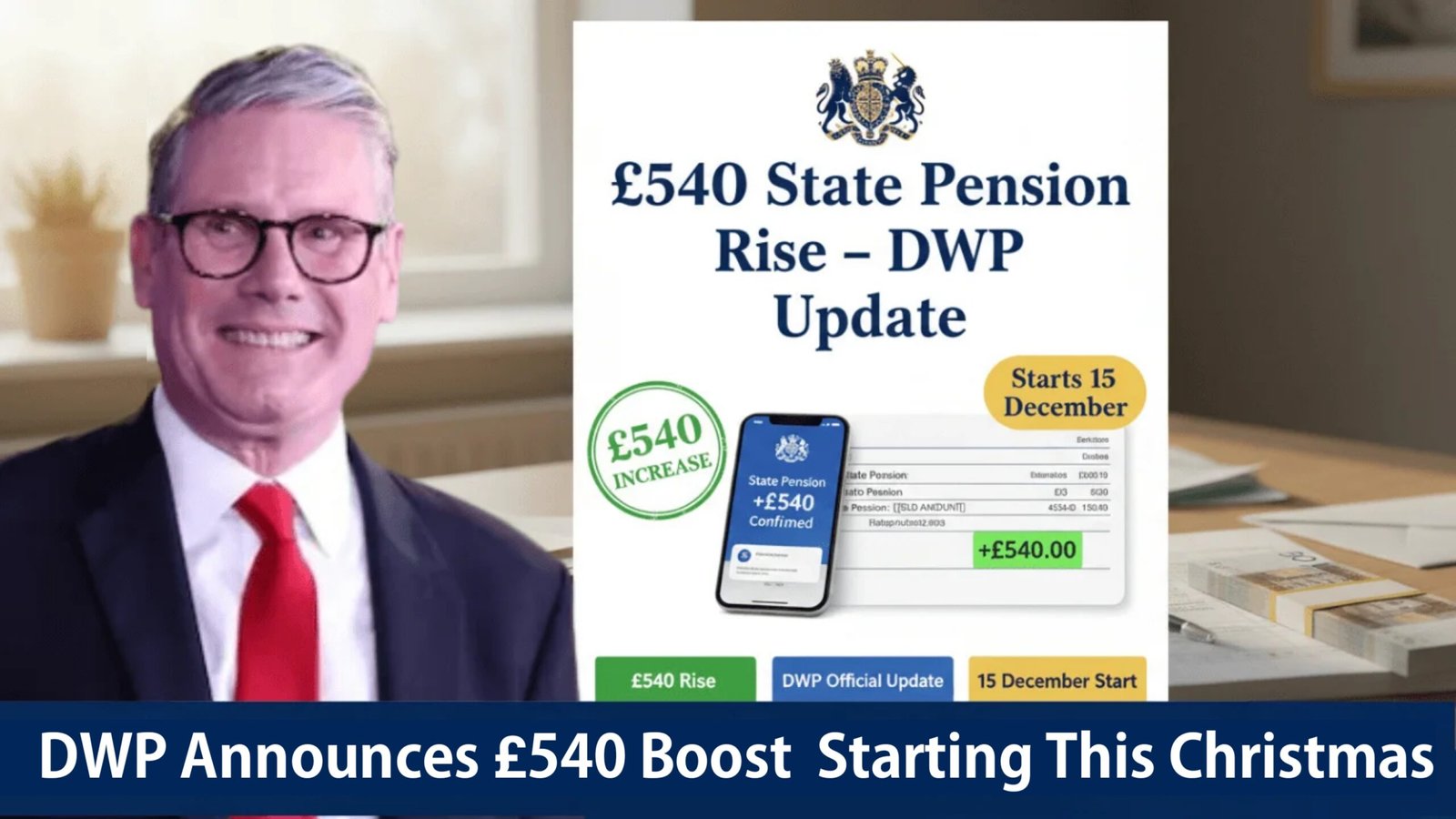
For millions of pensioners across the United Kingdom, Christmas is traditionally a time of warmth, family gatherings, and reflection. However, in recent years, the festive season has also brought financial pressure, particularly for older citizens living on a fixed income. Rising energy bills, higher food prices, increasing council tax, and general inflation have steadily eroded the purchasing power of pensions. Against this challenging backdrop, the Department for Work and Pensions (DWP) has announced a significant £540 boost to the State Pension, set to take effect starting this Christmas. This announcement has provided much-needed reassurance to pensioners who are struggling to keep up with the rising cost of living.
This article explains what the £540 boost means, why it has been introduced, who benefits most, how it fits into the wider pension system, and what pensioners should expect in the coming months.
What the £540 State Pension Boost Means
The £540 boost refers to the annual increase in State Pension payments resulting from the latest uprating applied by the DWP. Rather than being a one-off lump sum paid at once, this boost is spread across the year through higher weekly pension payments. From Christmas onward, pensioners will notice that their regular pension income is higher than before, helping them manage winter expenses more comfortably.
For many pensioners, this increase is particularly important during the colder months, when heating costs rise sharply. Winter often brings higher electricity and gas bills, alongside increased spending on food and healthcare. The £540 uplift aims to provide ongoing support rather than temporary relief, ensuring pensioners have a steadier and more reliable income throughout the year.
Why the DWP Introduced This Increase
The DWP’s decision to raise the State Pension is closely linked to economic conditions across the UK. Inflation has pushed up everyday costs, affecting pensioners more than many working-age households. Those relying primarily on the State Pension have limited ability to increase their income, making them especially vulnerable to price rises.
The government has repeatedly stated its commitment to protecting pensioners’ living standards. This increase reflects that promise, acknowledging that older citizens should not be left behind during periods of economic uncertainty. By introducing the uplift around Christmas, the DWP also recognises that winter is the most financially demanding time of the year for pensioners.
The Role of the State Pension in Retirement Income
For a large proportion of retirees in the UK, the State Pension forms the backbone of their income. While some pensioners have workplace pensions or personal savings, many depend heavily on the State Pension to cover essential living costs. This makes any increase, even if spread over the year, extremely significant.
The £540 annual boost can make a real difference to household budgeting. It may help cover rising grocery bills, contribute towards rent or service charges, or reduce anxiety about heating the home during cold spells. Although it may not eliminate financial stress entirely, it provides a meaningful cushion for those on tight budgets.
Who Will Benefit from the £540 Boost
The increase applies to people receiving the State Pension, including those on the New State Pension and those on the Basic State Pension under the older system. Pensioners who have built up sufficient National Insurance contributions will see the full benefit, while those with partial contributions may receive a proportionate increase.
It is important to note that pensioners receiving Pension Credit may also benefit indirectly. While Pension Credit tops up income to a minimum level, increases in the State Pension can affect overall entitlement. In some cases, the higher pension may reduce reliance on additional support, while still leaving pensioners better off overall.
How the Increase Is Applied
The £540 boost is not something pensioners need to apply for. It is automatically applied to eligible State Pension payments by the DWP. Payments continue to be made on the usual schedule, whether weekly or four-weekly, depending on how an individual receives their pension.
From Christmas onward, pensioners should check their payment amounts to confirm the increase has been applied. Any official communication from the DWP regarding uprating is usually sent by letter or made available through online pension accounts. Keeping an eye on these details ensures there are no unexpected issues or delays.
Christmas Timing and Winter Support
Introducing the increase around Christmas carries symbolic and practical importance. Winter is the season when pensioners are most at risk of fuel poverty. Heating costs can consume a large share of monthly income, forcing some older people to choose between heating and eating. A higher pension payment during this period can help reduce that pressure.
Although the £540 boost is spread across the year, its arrival during winter means pensioners begin receiving higher payments precisely when they need them most. This timing reflects broader efforts to support vulnerable households during colder months.
Impact on Cost of Living Pressures
While the £540 increase is welcome, it is also important to understand its limitations. Inflation has raised the cost of many essentials, sometimes at a faster rate than pension increases. Energy prices, in particular, remain a major concern for pensioners living in poorly insulated homes.
However, even modest increases can provide psychological reassurance. Knowing that income is rising, rather than stagnating, can ease stress and help pensioners plan more confidently. It also reduces the need to dip into savings, which many retirees rely on as a safety net.
Relationship with the Triple Lock Policy
The State Pension increase is closely connected to the government’s long-standing commitment to the triple lock. This policy ensures that the State Pension rises each year by the highest of earnings growth, inflation, or a fixed minimum percentage. The £540 annual boost reflects this mechanism in action.
Supporters of the triple lock argue that it protects pensioners from falling behind the rest of society. Critics point to its cost and long-term sustainability. Regardless of political debate, the current increase demonstrates that the policy continues to play a central role in shaping pension incomes.
What Pensioners Should Do Now
Most pensioners do not need to take any action to receive the increased payments. However, it is sensible to review household finances and consider how the additional income can be used most effectively. For some, this may mean setting aside extra money for winter bills. For others, it may allow small improvements in quality of life, such as better nutrition or occasional social activities.
Pensioners should also check whether they are eligible for additional support, such as Pension Credit, council tax reductions, or help with energy bills. The State Pension increase does not automatically disqualify individuals from other forms of assistance, and in many cases, combined support can significantly improve financial security.
Wider Economic and Social Implications
Beyond individual households, the pension increase has broader economic implications. Pensioners are an important part of local economies, spending money in shops, cafes, and service businesses. Higher pension incomes can support local communities, particularly in areas with a large retired population.
Socially, the increase reinforces the idea that older citizens are valued and supported. At a time when many feel anxious about rising costs and economic uncertainty, visible government action can help maintain trust and stability.
Concerns and Ongoing Challenges
Despite the positive news, challenges remain. Housing costs continue to rise, and many pensioners rent rather than own their homes outright. Others face health-related expenses that are not fully covered by public services. For these individuals, the £540 boost may help but not fully resolve financial difficulties.
There are also concerns about future pension adequacy. As life expectancy increases and economic pressures persist, questions remain about how the State Pension will evolve in the long term. For now, however, the Christmas-timed increase offers immediate relief.
Looking Ahead to the New Year
As the new year approaches, pensioners can enter it with a little more financial confidence. The higher State Pension payments provide a stronger foundation for managing everyday costs. While uncertainty remains in the wider economy, the increase signals ongoing support for retirees.
Future upratings will depend on economic conditions and government policy, but the current boost sets a positive tone. It reminds pensioners that their needs are recognised, particularly during challenging periods.
Final Thoughts
The DWP’s announcement of a £540 boost to the State Pension starting this Christmas is a significant development for UK pensioners. While it may not solve every financial challenge, it provides meaningful, reliable support at a time when it is most needed. By increasing regular income rather than offering short-term fixes, the government has taken a step toward improving financial stability for older citizens.
For pensioners across the UK, this increase brings not only extra money, but also reassurance. As winter sets in and costs rise, knowing that pension payments are higher can make Christmas a little less stressful and the year ahead slightly more secure.