
For millions of pensioners across the United Kingdom, Christmas 2025 comes at a time of continued financial pressure. While the festive season traditionally brings warmth, family gatherings, and celebration, it also highlights the rising cost of living faced by older citizens. Higher energy bills, food inflation, council tax, and healthcare expenses continue to stretch fixed retirement incomes.
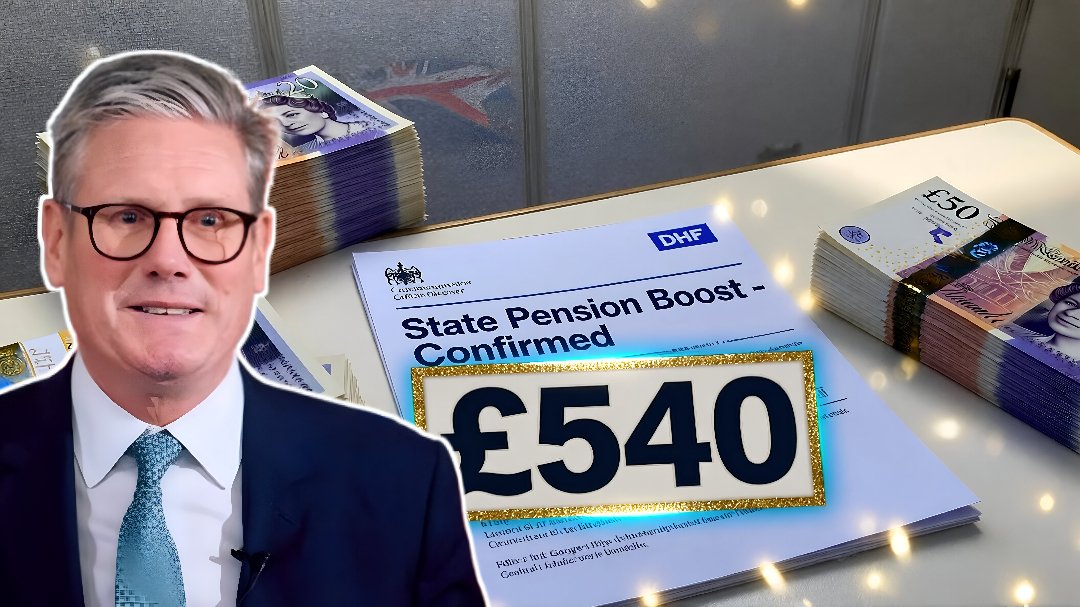
Against this background, the confirmed £540 annual boost to the UK State Pension, beginning around Christmas and rolling into the new year, has brought much-needed reassurance. Announced by the Department for Work and Pensions (DWP), this increase is designed to strengthen pensioner incomes during winter and beyond.
Importantly, this is not a one-off Christmas payment. Instead, it represents a permanent rise in State Pension rates that eligible pensioners will feel throughout the coming year.
What the £540 State Pension Boost Actually Means
The £540 figure refers to the total annual increase, not a single lump-sum payment. When spread across the year, most pensioners will see an increase of around £10 to £11 per week, depending on their State Pension entitlement.
While this may seem modest on a weekly basis, the impact over time is significant. For many pensioners, this extra income can help cover:
- Higher winter heating costs
- Rising grocery and food prices
- Transport and mobility expenses
- Day-to-day household bills
For households carefully budgeting each month, an extra £540 a year can provide meaningful financial breathing space.
A Quick Overview of the UK State Pension
The UK State Pension is a regular payment made by the government once a person reaches State Pension age. It is paid weekly or every four weeks and goes directly into a bank, building society, or credit union account.
There are two main types:
- New State Pension – for those reaching State Pension age after April 2016
- Basic State Pension – for those who reached State Pension age before that date
Eligibility is based mainly on National Insurance contributions, not on income or savings. This makes the State Pension a stable and predictable income source for millions of retirees across England, Scotland, Wales, and Northern Ireland.
Why the Increase Is Being Highlighted at Christmas
Although State Pension rises usually take effect from the new financial year, announcements are often made earlier. Confirming the increase ahead of Christmas is particularly important because winter is the most expensive time of year for pensioners.
Heating usage increases, daylight hours are shorter, and health-related costs often rise. Knowing that higher pension payments are coming helps pensioners plan ahead and reduces financial anxiety during the festive period.
Depending on individual payment cycles, many pensioners will begin to notice the higher rate shortly after the increase officially takes effect.
The Role of the State Pension Triple Lock
The £540 boost is closely linked to the government’s triple lock policy. Under this system, the State Pension rises each year by whichever is highest:
- Inflation
- Average earnings growth
- A fixed minimum percentage
With inflation and wages remaining elevated in recent years, the triple lock has resulted in larger pension increases. While the policy is sometimes debated due to its long-term cost, it has played a crucial role in protecting pensioners from falling behind during periods of rising living costs.
Who Will Receive the Increase Automatically?
Most people already receiving the State Pension will get the increase automatically. There is no need to apply, fill out forms, or contact the DWP.
You are generally eligible if:
- You have reached State Pension age
- You currently receive the State Pension
- You have sufficient National Insurance contributions or credits
Those receiving a partial State Pension will also see a proportional increase. Pensioners living in the UK are fully covered, while those living abroad may be affected by local agreements with the UK.
What This Means for Low-Income Pensioners
For pensioners on lower incomes, the increase is especially important. Many rely almost entirely on the State Pension, with little private savings. Rising prices can quickly erode purchasing power.
In some cases, a higher State Pension may slightly affect means-tested benefits such as Pension Credit. However, overall income levels are still expected to improve for most recipients.
The DWP continues to encourage pensioners to check their eligibility for additional support, as many people still miss out on benefits they are entitled to claim.
How and When Payments Will Be Made
There is no change to how payments are made. Pensioners will receive the higher amount through their existing payment method and schedule.
- Weekly payments will increase slightly each week
- Four-weekly payments will reflect the new higher total
Payments will continue to be paid directly into the same bank or building society account. Pensioners are advised to check their statements once the increase takes effect to ensure the correct amount is received.
Public Reaction and Outlook
The announcement has been welcomed with cautious optimism. While pensioners appreciate the boost, many remain concerned about future living costs and long-term economic stability.
Still, the confirmation of this increase sends a clear signal that pension uprating remains a priority. After past periods of uncertainty, this commitment has restored a measure of confidence among older citizens.
Final Thoughts
The £540 State Pension boost starting this Christmas is more than just a headline figure. It represents ongoing support for millions of UK pensioners at a time when financial pressures remain high.
While it may not eliminate every cost-of-living challenge, it offers real help—especially during winter—and improves income security going into the new year.
As Christmas approaches, this increase stands out as timely and meaningful support, helping pensioners face the months ahead with greater confidence and stability.